
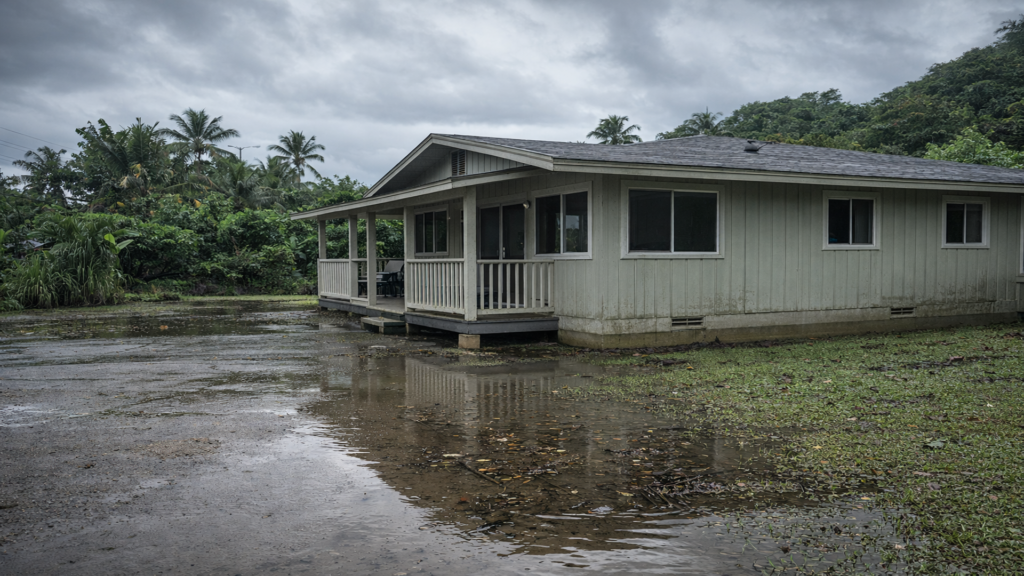
Why Mold Grows So Fast After a Flood in Hawaii
How fast does mold grow after flooding in Hawaii? Mold can begin growing within 24 to 48 hours after a flooding event. In Hawaii, where average relative humidity sits between 70–80% year-round, conditions for mold growth are accelerated compared to drier climates. Porous materials like drywall, carpet padding, and ceiling insulation are especially vulnerable in the first 48 hours after floodwaters recede — often in areas that aren’t visible to the naked eye.
STAT CALLOUT Hawaii’s average relative humidity: 70–80% year-round. The EPA recommends keeping indoor humidity below 60% to prevent mold growth. On most days in Honolulu, you’re already above that threshold — before a storm even hits.
That number matters a lot. On the mainland, a flood is an event. In Hawaii, it’s a flood layered on top of an already humid baseline. When floodwaters recede, the moisture doesn’t just evaporate — it has nowhere to go. The air outside is nearly as saturated as the materials inside. That’s what makes mold after a flood in Hawaii a fundamentally different problem than it would be in Denver or Phoenix.
The 48-Hour Clock: What’s Happening Inside Your Walls Right Now
Mold needs three things to grow: moisture, warmth, and organic material. Hawaii provides all three in abundance, every single day of the year — regardless of season. After a low flooding event, those conditions become extreme.
Here’s what’s happening inside your walls and under your floors during the hours after a flood:
| Time Elapsed | What’s Happening | Action Required |
|---|---|---|
| 0–6 hours | Standing water saturating porous materials; drywall, wood framing, and insulation absorbing moisture | Document everything; contact a local contractor immediately |
| 6–24 hours | Moisture wicking deeper into wall cavities; subfloor and insulation reaching critical saturation; mold spores activating | Begin professional structural drying; do NOT use household fans |
| 24–48 hours | Mold colonization begins on drywall paper, wood framing, and insulation; not yet visible | Professional drying must be underway; any delay increases remediation scope significantly |
| 48–72 hours | Active mold colonies established; may begin releasing MVOCs (Microbial Volatile Organic Compounds); musty odor may be detectable | Full mold assessment required; remediation scope expanding |
| 72+ hours | Mold spreads to surrounding materials; potential structural involvement begins; HVAC system may be distributing spores | Comprehensive remediation required; structural repairs likely needed |
The most dangerous mold is also the most invisible. By the time you see dark spots on your drywall, the growth has typically been underway for three to five days — and what’s visible is a fraction of what’s happening behind the surface.
How Hawaii’s Humidity Baseline Accelerates Mold Beyond the National Average
Most mold guidance is written for the mainland, where a home can return to normal indoor humidity levels fairly quickly after a flooding event. In Hawaii, that recovery doesn’t happen on its own. With outdoor humidity consistently in the 70–80% range, even opening windows — which feels intuitive — doesn’t dry out your property. It brings more moisture in.
This means two things for property owners here. First, standard drying timelines don’t apply — materials that would dry out in 48 hours in a dry climate can stay saturated for a week or more in Hawaii without professional drying equipment. Second, the window to prevent mold growth is shorter here than anywhere else in the country.
Salt Air and Storm Water: Why Low Flooding Is Especially Corrosive
Low floodwater isn’t clean. It picks up ground debris, contaminants, and in coastal areas, salt from storm surge. This places it in what the IICRC (Institute of Inspection, Cleaning and Restoration Certification) classifies as Category 3 water damage — the most serious category, requiring more aggressive remediation than a clean water leak from a broken pipe.
Salt-laden moisture is also more corrosive than freshwater. It penetrates wood framing and window seals more aggressively, accelerates the breakdown of drywall paper (which is a primary food source for mold), and can compromise metal hardware and fasteners over time. Repairs after a low event should account for this — corrosion-resistant materials and hardware are worth the modest additional cost.
Understanding why mold grows so fast is the first step. The more immediate question — especially if you’re managing a property remotely — is knowing how to tell if it’s already happening.
Signs of Mold After Flood Damage — What to Look and Ask For
Here’s the challenge: most mold after a flood isn’t visible. It’s growing inside wall cavities, under tile, in attic insulation, and beneath flooring while the surface looks fine. By the time you can see it, the problem is already significant.
Whether you’re walking through your property yourself or coordinating with a tenant from the mainland, knowing what to look for — and where — makes all the difference.
What to Ask Your Tenant — Or Look For Yourself — When Assessing Flood Damage
If you’re a remote landlord, your tenant is your first line of detection. Give them a specific list of things to check, not just a general “let me know if anything looks off.” And if you’re a local homeowner who returned after evacuation, run through this same checklist yourself before you assume everything is fine.
The five locations where hidden mold is most likely to develop in an Oahu home after flooding:
- Behind drywall near exterior walls — especially in rooms that took on water. Wet drywall paper is a primary food source for mold, and the interior of wall cavities stays moist long after the surface feels dry.
- Under bathroom flooring — particularly under tile, where moisture gets trapped between the tile adhesive and the subfloor with no way to escape. You won’t see this mold, but you’ll eventually smell it.
- In ceiling insulation — batt insulation above a flooded room absorbs moisture and holds it for weeks. It doesn’t dry out on its own, and it’s a prime environment for mold colonization.
- In the HVAC air handler — floodwater can push debris and moisture into your system. If the system runs while internal surfaces are wet, it distributes mold spores throughout the entire property.
- Along baseboards and lower drywall sections — the first area water contacts, and the last area people think to inspect after the obvious standing water is gone.
The 7 Warning Signs of Post-Flood Mold in a Hawaii Home
Whether you’re on-island or asking your tenant to assess the property, here’s what to look — and smell — for:
- Musty or earthy odor — often present before any visible growth appears. This is one of the most reliable early indicators.
- Dark spots or discoloration on walls or ceilings — gray, green, or black patches, even small ones. These are visible colonies and represent late-stage growth.
- Soft, spongy, or bubbling paint — paint that feels soft to the touch or is bubbling away from the surface indicates moisture trapped in the drywall beneath.
- Discolored or crumbling grout — especially in bathrooms, where water infiltration behind tile is common after flooding.
- Condensation on interior windows or walls — unexplained moisture on surfaces that weren’t previously an issue signals elevated indoor humidity and possible active growth nearby.
- Occupants reporting respiratory symptoms — coughing, itchy eyes, or increased allergy-like symptoms that started after the storm. MVOCs from mold growth can cause these reactions before any visible mold is present.
- Standing water or damp areas 48+ hours after flooding — any area that’s still wet after two days is actively developing conditions for mold colonization.
PULL QUOTE “Visual mold is a late-stage warning. By the time you can see it on drywall, it’s likely been growing for 3–5 days — and spreading well beyond what’s visible.”
How to Document Damage Properly (Whether You’re On-Island or 3,000 Miles Away)
Documentation starts the moment flooding occurs — not after you’ve assessed the damage. Whether you’re a local homeowner building an insurance claim or a remote landlord coordinating from the mainland, the same protocol applies.
Ask for — or take yourself — time-stamped photos and video of every affected area before anything is moved, dried, or repaired. Shoot from multiple angles. Capture the walls at baseboard level, the ceiling in affected rooms, and any standing water with visible landmarks in frame so the depth is apparent. Turn on the date and time stamp in your phone camera settings if it isn’t already on.
This documentation serves three purposes: it validates your insurance claim, it establishes a baseline for measuring remediation progress, and it protects you legally — both as a landlord demonstrating prompt response and as a homeowner with proof of damage for future resale disclosure.
Once you’ve confirmed there’s a moisture problem — or even if you’re not sure — the next 24 hours are the most critical window you have to prevent a minor flood from becoming a major remediation bill. If you need a post-storm property check on Oahu, we’re available now.
The 48-Hour Window — What to Do Right Now If Your Property Flooded
Speed is the single most important variable in post-flood mold prevention. Not the size of the water extraction equipment, not the brand of dehumidifier, not the remediation company’s star rating — speed. Every hour of delay after a flooding event increases the scope and cost of what needs to happen next.
Here’s how to use the first 48 hours correctly.
Hour 0–6: The Calls You Need to Make Before You Do Anything Else
If you’re a remote landlord: Contact your tenant immediately. Don’t wait for them to call you. Ask them to take time-stamped photos and video of every wet area and send them to you right now. Ask whether the property is safe to stay in — standing water near electrical panels or outlets is a safety issue, not just a property issue.
Your second call is to a local, licensed contractor who can physically access the property. This is the call that determines everything that follows. You need eyes and hands on the ground within hours, not days. The contractor’s job in this first phase is to assess, document, and begin mitigation — not finish a full repair. Getting them there quickly is what matters.
If you’re a local homeowner: Don’t start mopping and assume you’ve solved the problem. Your floors and walls may feel surface-dry while wall cavities and subflooring are still heavily saturated. Before you begin any cleanup, document the damage with photos and video, then contact a professional for a moisture assessment.
Hour 6–24: Why Professional Structural Drying Is Non-Negotiable in Hawaii
This is where most property owners make the most costly mistake. It feels logical to open windows, run every fan in the house, and get air moving. Don’t.
Household fans don’t draw moisture out of wall cavities — they circulate it. In Hawaii’s humid climate, they may actually pull more moisture-laden air from outside into your already-saturated interior. Worse, they can distribute mold spores from an affected area to parts of the property that weren’t previously contaminated.
Professional structural drying uses industrial dehumidifiers and high-velocity air movers specifically designed to create a drying environment inside walls and under flooring — not just at the surface. This equipment needs to be in place within the first 24 hours to be maximally effective.
Do not wait for your insurance adjuster to assess the damage before beginning mitigation. Most property insurance policies include a provision requiring prompt mitigation — waiting for the adjuster while damage progresses can actually jeopardize your claim.
Hour 24–48: What Happens If You Wait — And What It Costs
The numbers tell the story clearly:
| Repair Item | Act Within 24 Hours | Wait 72+ Hours |
|---|---|---|
| Moisture assessment | $150–$300 | $300–$600 (increased scope) |
| Structural drying (per room) | $500–$1,200 | $1,000–$2,500 (extended duration) |
| Drywall replacement | $400–$800 per panel | $800–$1,800+ (mold-contaminated removal adds cost) |
| Flooring replacement | $800–$2,500 per room | $1,500–$4,500+ (subfloor involvement likely) |
| HVAC cleaning | $300–$600 | $600–$1,500+ (mold in duct system) |
Water damage repair averages $3,362 nationally. In Hawaii, contractor rates and material costs run 30–60% higher — and mold remediation for a single room can range from $1,500 to $10,000+ depending on how far it’s spread. Acting in the first 24 hours is almost always the most financially sound decision you can make.
YOUR OAHU PROPERTY NEEDS EYES ON THE GROUND — NOW
If your property was impacted by the recent flooding or you’re not sure of its current condition, we can help. Handy Andy Hawaii provides post-storm property assessments and damage repair across all of Oahu. We’re locally licensed (Contractor License #BC-30573), veteran-owned, and built to support property owners who need a trusted local team they can count on.
Call (808) 285-3443 | Or send us a message
Taking action in the first 48 hours is critical — but once you’ve stabilized the situation, there are longer-term repairs that will determine whether your Oahu property fully recovers or develops chronic moisture problems for years to come.
Post-Flood Repairs That Prevent Long-Term Mold in Hawaii Properties
Stopping active mold growth is only half the job. The other half is making the right repair decisions — which materials to replace versus which can be salvaged, and which hidden areas need attention even when they look fine from the surface.
Get these calls wrong, and you’ll be dealing with a musty smell and another round of remediation six months from now.
Drywall and Insulation: The Two Materials You Cannot Dry — Only Replace
This is the most important repair decision you’ll make after a flood, and it’s one that surprises most property owners: wet drywall cannot be effectively dried and reused. It has to be removed.
Drywall is made of gypsum sandwiched between paper facing layers. That paper is a primary food source for mold. Once the paper is saturated, it retains moisture even after the surface feels dry to the touch, and mold colonization inside the wall cavity will continue. The correct approach is to cut out and remove any drywall that was in contact with floodwater — typically everything from the floor to 12–18 inches above the flood line — and replace it after the wall cavity is fully dried and inspected.
The same principle applies to batt insulation. Once saturated, fiberglass or cellulose insulation cannot be effectively dried and must be removed. Leaving wet insulation inside a wall cavity is one of the most common post-flood mistakes we see on Oahu — it’s invisible, it holds moisture for weeks, and it provides an ideal environment for continued mold growth long after everything else looks repaired.
Flooring, Tile, and Subfloor: What’s Worth Saving and What Needs to Go
| Material | Wet 0–24 hrs | Wet 24–48 hrs | Wet 48+ hrs |
|---|---|---|---|
| Drywall | Remove if saturated | Remove | Remove |
| Batt insulation | Remove | Remove | Remove |
| Hardwood flooring | May be salvageable with fast drying | Likely warped — assess | Replace |
| Tile (intact grout) | Clean and dry; monitor | Professional assessment | Inspect subfloor |
| Tile (cracked grout) | Remove — water has infiltrated | Remove | Remove |
| Carpet | Remove — cannot be effectively dried | Remove | Remove |
| Subflooring | Assess; dry aggressively | Assess for soft spots | Likely replace |
| Window trim | Dry; assess for warping | Assess | Replace if soft |
| HVAC filters | Replace | Replace | Replace + inspect handler |
Tile is where most property owners get a false sense of security. The tile surface may look fine and feel dry — but if grout lines were compromised before the flood (cracked, missing, or deteriorating sealant), water has been getting behind the tile and into the subfloor. The subfloor can be heavily saturated while the tile above it looks perfectly normal.
A North Shore property in Haleiwa — one of the hardest-hit areas in the March 2026 storms — is a useful illustration. If you replace the visible flooring but skip a subfloor inspection, you may find yourself back in the same conversation six weeks later when a tenant reports a persistent musty smell. That delayed subfloor replacement will cost two to three times what it would have cost during the original repair.
HVAC and Ventilation: The Overlooked Mold Vector in Hawaii Homes
Your HVAC system is one of the most important things to inspect after a flood, and one of the most frequently skipped.
Floodwater and storm debris can infiltrate air handlers, especially in properties with ground-level or exterior-mounted equipment. If your system runs while internal surfaces are wet and filters are contaminated, it distributes mold spores through every duct in the house. A property that was flooding in one room can end up with mold throughout — because the HVAC spread it.
After any flooding event, replace HVAC filters immediately and have a professional inspect the air handler before running the system. This is especially important for properties in low-lying areas that took on significant water, and for any property where the system was running during the storm.
Exterior Repairs That Stop Mold Before It Starts
The storm damage you see on the outside of your property directly affects what happens on the inside. Missing or damaged roof flashing allows water to infiltrate the attic with every subsequent rain — not just during storms. Damaged soffits, fascia, and gutter systems direct water toward your foundation and exterior walls instead of away from them.
After a flood, a thorough exterior inspection is not optional. Post-storm maintenance inspection for your Oahu property should cover the roof line, all penetrations (vents, pipes, fixtures), window and door frames, exterior caulking, and the drainage path around the building’s perimeter.
Getting the repairs right is essential. But for landlords especially, there’s another dimension to post-flood mold that most remote owners don’t discover until it’s too late: the legal and financial stakes.
Mold, Property Value, and Legal Obligations — What Every Hawaii Property Owner Should Know
The financial consequences of unaddressed mold after a flood go beyond the repair bill. Depending on your situation — landlord, owner-occupant, or investor — the stakes look different, but the urgency is the same for everyone.
Landlords: What Hawaii’s Warranty of Habitability Requires After a Flood
Hawaii doesn’t have a standalone mold statute. There’s no specific law that sets a remediation deadline or lists mold as a separately regulated hazard. But that doesn’t mean landlords are off the hook — it means they’re covered by a broader legal obligation that’s harder to wiggle out of.
Under Hawaii’s warranty of habitability, landlords are required to maintain rental properties that are safe and livable. Mold that poses a health risk is a habitability violation — full stop. Once a tenant notifies you of a moisture or mold issue, the clock starts. Urgent health and safety issues generally require a response within 24 to 48 hours, with more extensive repairs addressed within a reasonable timeframe after that.
Is a landlord responsible for mold after a flood in Hawaii? Hawaii does not have a specific mold statute, but landlords are required under the state’s warranty of habitability to maintain safe and habitable premises. Mold resulting from unaddressed flood damage qualifies as a habitability violation and must be remediated promptly.
If you fail to act on known mold, you’re exposed to: constructive eviction claims (the tenant terminates the lease and holds you liable), rent withholding, and in more serious cases, personal injury or property damage claims. These aren’t theoretical risks — they’re the predictable outcomes of delayed action in Hawaii’s tenant-protective legal environment.
One more Hawaii-specific detail: the landlord-tenant code requires 48 hours’ notice before entering an occupied unit. In a mold emergency, a tenant can waive that notice to allow faster contractor access. It’s worth communicating directly with your tenant to coordinate this when time matters.
Homeowners: How Mold Affects Property Value and Resale Disclosure in Hawaii
If you’re not a landlord and you own your home outright, you might assume this section doesn’t apply to you. It does.
PROPERTY VALUE CALLOUT Undisclosed mold is a material defect under Hawaii real estate law. Sellers who fail to disclose known mold at time of sale can face post-closing legal disputes. Remediating mold before listing — and documenting the remediation — protects both your sale price and your legal standing.
Mold that spreads to structural elements — framing, sheathing, roof decking — can reduce your property’s value by 3–10%. In a market where Oahu home values routinely exceed $800,000, that’s $24,000 to $80,000 of equity at risk. And that’s before you factor in the legal exposure of selling a property with undisclosed mold.
The remediation math is straightforward: containment before structural spread averages $1,500 to $4,500 per affected area. Remediation after structural involvement can run $15,000 or more — and that’s before any required structural repairs. Early action isn’t just the right move for your tenants’ health. It’s the right financial decision for your investment.
Your Documentation Checklist: The Paper Trail Every Property Owner Needs
Whether you’re a landlord protecting yourself from tenant disputes or a homeowner building a record for your insurance claim and future resale, the documentation standard is the same. Start this process immediately — not after cleanup is underway.
Your Post-Flood Paper Trail: 8 Things Every Property Owner Should Document
- Time-stamped photos and video of all affected areas, taken before any cleanup begins
- Written notification log — if you’re a tenant, text or email your landlord; if you’re a landlord, confirm you’ve received the tenant’s notification in writing
- Response timestamp — when you first acknowledged the issue and what action you committed to
- Contractor contact log — who you called, when, and what they said
- Scope of work documentation — a written record of what the contractor assessed and what remediation was recommended
- Materials removed — a list of what was taken out (drywall sections, insulation, flooring), with photos
- Drying equipment log — dates the equipment was in place, readings from moisture meters over time
- Final inspection sign-off — written confirmation from a professional that moisture levels are within acceptable range before repairs begin
This paper trail is your protection in every direction — with insurance, with tenants, and with future buyers.
What Tenants Can Do If a Landlord Doesn’t Act — And Why Fast Response Prevents It
If a landlord fails to respond to a reported mold issue within a reasonable timeframe, Hawaii law provides tenants with remedies including the right to repair and deduct (for lower-cost repairs), lease termination, and in serious cases, civil claims for damages. The Hawaii Department of Health also publishes an After the Flood guide with health and safety guidance for flood-affected properties. The tenant doesn’t have to live with a health hazard, and they have legal options if you don’t respond.
The fastest and cheapest way to make all of this irrelevant is to respond the moment the issue is reported. A landlord who documents their response, gets a professional on-site promptly, and communicates clearly with the tenant throughout is legally protected and almost never faces these escalations. If you’re managing a property remotely, our property management support for Oahu property owners can help you stay ahead of exactly these situations. The property owners who end up in disputes are the ones who waited.
Whether you’re a landlord managing tenants or a homeowner protecting your primary residence, the most powerful thing you can do right now is shift from reactive to proactive — because Hawaii’s next big storm is not a matter of if.
How Hawaii Property Owners Can Stay Ahead of Mold Year-Round
The March 2026 storms was exceptional in its severity. But Oahu averages three to five significant storm events every year, and the baseline humidity that makes mold grow so fast after a flood is present every day, regardless of the weather. Mold prevention in Hawaii isn’t a post-storm checklist — it’s an ongoing maintenance discipline.
The Oahu Property Maintenance Calendar: Mold Prevention by Season
| Season | Task | Mold Risk Addressed | Frequency | Especially Critical For |
|---|---|---|---|---|
| Pre-wet season (Sept–Oct) | HVAC filter replacement + handler inspection | Prevents spore distribution | Annual | All properties |
| Pre-wet season (Sept–Oct) | Roof and flashing inspection | Stops water infiltration at source | Annual | Older homes, post-storm |
| Wet season (Oct–Apr) | Gutter cleaning | Prevents foundation water infiltration | Every 2–3 months | Properties near trees |
| Wet season (Oct–Apr) | Post-storm exterior walkthrough | Identifies damage before next rain | After each significant event | Vacant and rental properties |
| Year-round | Window and door caulk inspection | Seals moisture entry points | Annual + after storms | Coastal and windward properties |
| Year-round | Bathroom exhaust fan testing | Reduces chronic interior humidity | Quarterly | All properties |
| Dry season (May–Sept) | Crawl space / attic moisture check | Identifies hidden moisture accumulation | Annual | Older structures |
| Year-round | Exterior wall and soffit inspection | Catches salt air deterioration early | Annual | All Oahu properties |
For Remote Owners: Setting Up a Monitoring and Response System That Works From Anywhere
If you’re managing an Oahu property from the mainland or from a deployment, the honest answer is that no app or sensor replaces someone who can physically walk through the front door. But you can build a system that significantly reduces your exposure.
The most effective setup has three layers. First, a tenant who knows exactly what to report and how to report it — that means a move-in documentation protocol that establishes a baseline and a clear written reporting procedure for moisture issues. Second, a local contractor relationship you’ve established before an emergency happens — not someone you’re cold-calling at 9pm during a storm. Third, a post-storm check-in protocol: every time there’s a significant weather event on Oahu, your contractor does a walkthrough within 48 hours, even if your tenant hasn’t flagged anything.
That last layer is the one most remote owners skip, and it’s the most valuable. Tenants don’t always notice early moisture signs. A professional who knows what to look for will.
For Local Homeowners: The Ventilation and Inspection Habits That Matter Most in Hawaii
If you live in your property full-time, you have the advantage of being there — but that doesn’t mean mold problems announce themselves. The most effective habits for local homeowners are the ones that reduce chronic indoor humidity before it becomes a moisture problem.
Bathroom exhaust fans are non-negotiable in Hawaii — not just during showers, but for 15–20 minutes afterward to clear residual humidity. Kitchen range hoods should be used every time you cook. Attic ventilation is often the most overlooked element in older Oahu homes, and inadequate attic airflow creates persistent elevated humidity that affects every room below. If your utility bills have been higher than usual, or you’ve noticed unexplained condensation on interior windows, those are signals worth investigating before the next storm season starts.
The Case for a Local Handyman Partnership — Before the Storm
The post-storm contractor shortage on Oahu is real. After the March 2026 Hawaii storm, wait times for licensed contractors stretched to weeks for property owners who hadn’t established a relationship in advance. National restoration companies faced backlogs. Local handymen with existing client relationships prioritized those clients first.
For rental property investors, the calculus is clear: Hawaii vacancy costs average $300 or more per day in lost rent. A two-week mold remediation that forces a unit offline costs $4,200 in lost revenue alone — before the repair bill. For homeowners, structural mold remediation averages $15,000 or more. Scheduled property maintenance on Oahu is not an expense. It’s insurance against a much larger one.
We offer scheduled property inspections and maintenance services across all of Oahu — built for remote owners, local homeowners, and everyone in between. One call. One team. No surprises.
Schedule a Property Inspection | (808) 285-3443
Whether you’re a homeowner who just returned from evacuation or a landlord reviewing storm damage photos from the mainland, here are the questions we hear most from Oahu property owners right now — and the direct answers.
We’re answering calls from property owners across Oahu right now. Whether you need a post-storm walkthrough, damage documentation for your insurance claim, or storm damage repair on Oahu to prevent mold before it takes hold — our team is available Monday–Friday, with after-hours availability for urgent situations.
Call (808) 285-3443 | info@handyandyhawaii.com
Handy Andy Hawaii is a veteran-owned, locally licensed handyman and home services company serving all of Oahu. Contractor License #BC-30573. We understand what it means to be trusted with something as important as your property — because we live and work here too.
For scheduled maintenance, post-storm inspections, drywall and carpentry repairs, or any home repair need across Oahu, call (808) 285-3443 or visit handyandyhawaii.us
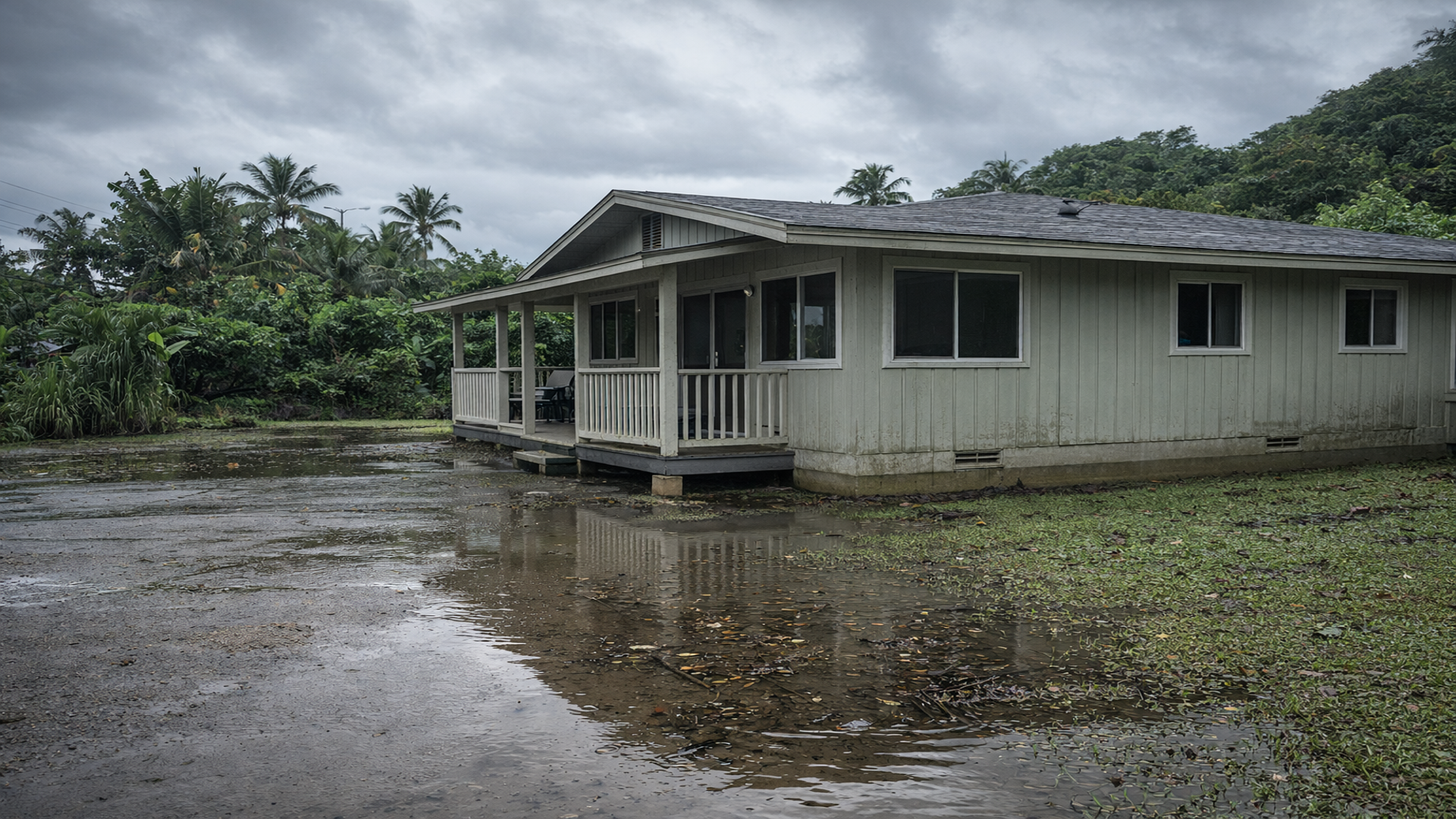
Mold After a Flood: The Hidden Damage Hawaii Property Owners Can’t Afford to Ignore Picture two scenes from the same weekend. A property owner in
Whether you’re a homeowner or a renter, investing in a reliable home security system can provide peace of mind and protect your loved ones and
With its breathtaking landscapes and serene beaches, Hawaii is often seen as paradise on Earth. However, like any other place, it’s not immune to security

Being a homeowner in the picturesque paradise of Hawaii is a dream come true, but it also comes with responsibilities. Home maintenance can often seem
As a homeowner, it’s natural to want to take care of your property and make improvements whenever possible. DIY projects can be rewarding and cost-effective,

Energy Efficiency In Hawaii Homes: Tips For Lowering Your Utility Bills As a homeowner in Hawaii, you know that energy costs can be extremely high
