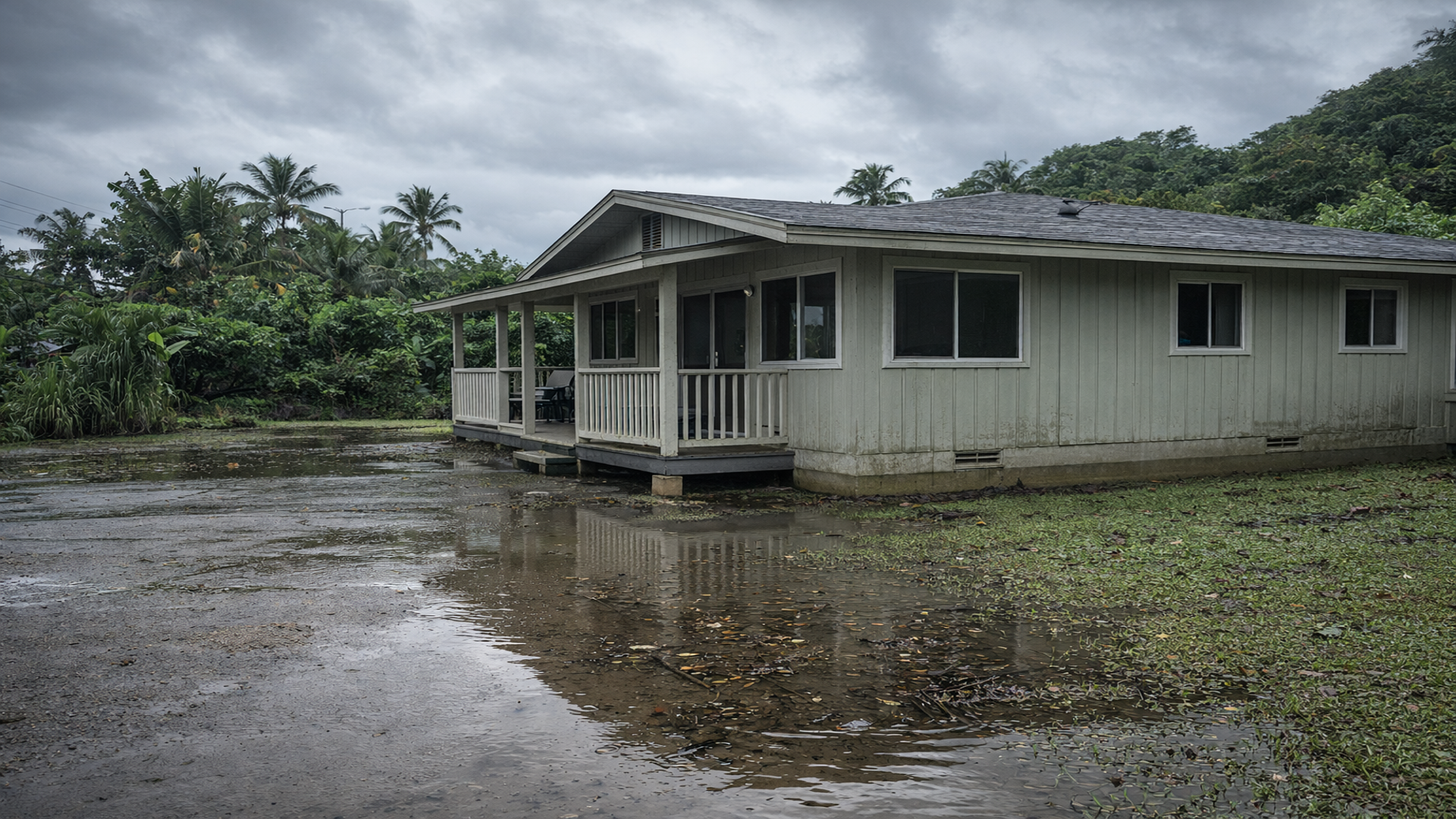
Mold After a Flood: The Hidden Damage Hawaii Property Owners Can’t Afford to Ignore Picture two scenes from the same weekend. A property owner in

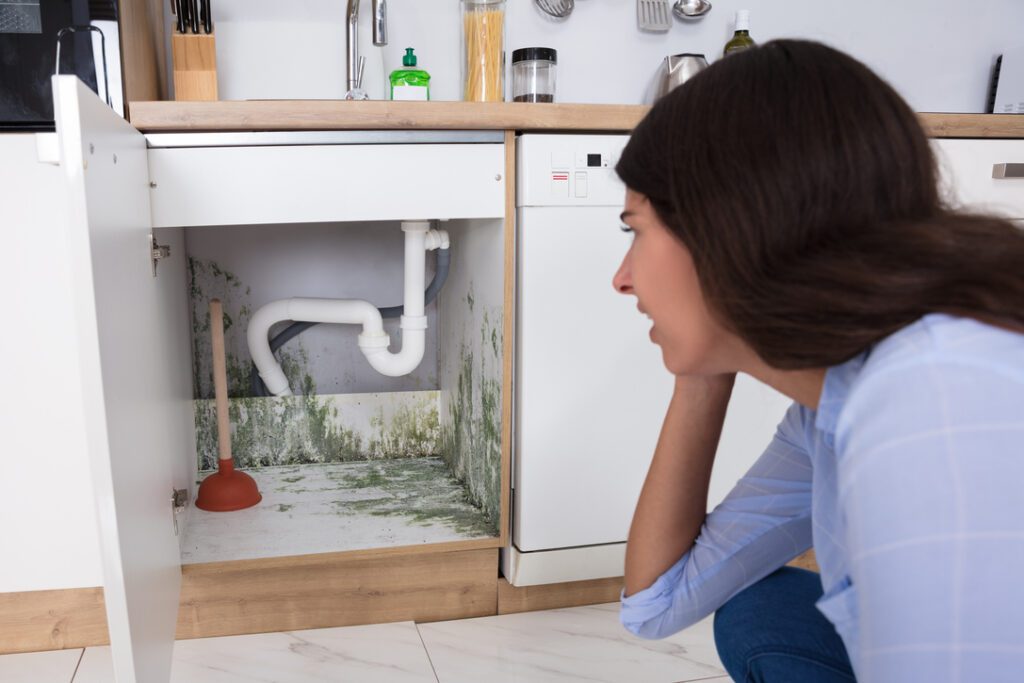
Last spring, we got a call from a property owner on the mainland — a retired Army officer who’d PCS’d back to Georgia after years stationed at Schofield Barracks. His tenant had just sent photos: dark patches spreading across the bathroom ceiling, fuzzy gray growth climbing the baseboards in the master bedroom, and a suspicious black stain behind the kitchen cabinets. He could see it clearly in the photos, but being 4,800 miles away, he felt completely powerless. “I don’t even know if this is dangerous,” he told us. “And I don’t know if my tenant is safe living there.”
That call is one we hear some version of every month. Hawaii’s climate is breathtaking — but for your home, it is relentless. With relative humidity hovering between 65 and 85 percent year-round, salt air accelerating the breakdown of sealants and building materials, and trade winds occasionally driving rain through poorly sealed openings, mold does not need much of an invitation here. Add a roof that has been quietly leaking for three months while the owner watches from a mainland time zone, and you have the conditions for a serious — and expensive — problem.
At Handy Andy Hawaii, we are a veteran-owned, locally licensed handyman and home services company (Contractor License #BC-30573) serving all of Oahu. Our team works daily with homeowners, rental investors, and military families managing exactly these situations. This guide covers everything you need to know about mold in Hawaii homes: what causes it, how to clean it from both hard and porous surfaces, what to do about black mold, and — most importantly — how to prevent mold from taking root in the first place.
Mold is a fungus that reproduces through microscopic spores floating through the air indoors and outdoors at all times. Those spores enter your home through open doors, windows, HVAC vents, and any gap in the building envelope. What makes Hawaii so mold-prone is not the spores — they are everywhere — it is the conditions that allow those spores to thrive once they land.
Mold needs three things to grow: moisture, organic material to feed on, and temperatures above roughly 40°F. Hawaii checks all three boxes continuously. The islands average 65–85% relative humidity depending on elevation and windward versus leeward location. Much of Oahu’s housing stock was built before modern vapor barriers and moisture management were standard practice. Salt air from the ocean accelerates the breakdown of sealants, caulk, and paint — creating micro-gaps where moisture infiltrates walls and ceilings over time. And Hawaii’s temperatures almost never drop below 60°F, so there is no cold season to slow mold’s biological activity.
Kona Low storm events compound the risk dramatically. When a Kona Low makes landfall, heavy rain, strong south winds, and localized flooding can push water into homes that would otherwise stay dry. Properties that experience any water intrusion can develop visible mold within 24–48 hours if the moisture is not extracted immediately.
Who faces the highest risk on Oahu: Remote property owners who cannot inspect regularly; rental properties where small leaks go unreported for weeks; vacation homes and investment condos that sit unoccupied during extended periods of high humidity; and military families whose properties sit vacant during PCS moves.
Not all mold is the same, and identifying the type you are dealing with matters — for your cleaning approach and for knowing when to call a professional rather than attempt DIY treatment.
Black mold gets the most attention, and for good reason. Stachybotrys chartarum — commonly called black mold — grows in environments with severe, chronic moisture: flooded areas, wall cavities with persistent leaks, or drywall that stayed wet for weeks after a storm. It appears as dark greenish-black and slimy, and it requires a more serious remediation approach than surface mold.
Black mold is less common than other varieties in Hawaii, but it does occur — particularly in properties that have experienced prolonged water intrusion from roof leaks, plumbing failures, or storm flooding. If you see what looks like black mold covering more than a few square feet, or if it appears in a location suggesting it has penetrated behind the wall or into structural materials, do not attempt to clean it yourself. The mycotoxins associated with Stachybotrys can cause respiratory issues, and improper removal can release dense concentrations of spores into the air throughout the home.
These are the molds most commonly found on Oahu surfaces — appearing as dark brown, green, or black patches on bathroom grout, window frames, exterior-facing walls, and around AC vents. They are not as acutely dangerous as Stachybotrys, but they do cause respiratory irritation and should be removed promptly. These varieties are the most amenable to the DIY cleaning methods described in the sections below.
Mildew is technically a type of mold — flat, powdery, and white or gray. You will most often find it on bathroom walls, grout lines, shower curtains, and window frames. It is the earliest warning sign that moisture is elevated in an area. Mildew is the easiest type to treat, and catching it early prevents the development of more serious mold colonies beneath the surface.
Hard, non-porous surfaces — ceramic tile, glass, metal, sealed concrete, and glazed porcelain — are the most forgiving for mold removal because mold cannot penetrate below the surface. Cleaning agents can reach and kill the full mold colony with surface-level application.
Vinegar is mildly acidic (approximately 5% acetic acid) and genuinely effective at killing most common mold species on non-porous surfaces. It is also non-toxic, making it safe to use in areas where children and pets spend time.
How to use it: Fill a spray bottle with undiluted white distilled vinegar. Spray the affected surface generously and let it sit for at least one hour — do not rush this step. For light growth, wipe clean with a damp cloth. For heavier growth or staining, scrub with a stiff-bristled brush before wiping down. Do not rinse — residual vinegar continues to inhibit future mold growth.
Best for: Bathroom tile, glass shower doors, sinks, countertops, and lightly affected grout lines.
Bleach is highly effective at killing mold on hard, non-porous surfaces and removing the dark staining mold leaves behind. It is the strongest readily available option for surface discoloration on tile, glass, metal, and sealed stone.
How to use it: Mix one cup of chlorine bleach into one gallon of water. Apply to the moldy surface using a spray bottle or sponge. Let sit for 15 minutes, then scrub with a brush if needed and rinse thoroughly with clean water. Always ventilate the area — open windows and run exhaust fans — and wear rubber gloves and eye protection throughout.
Critical limitation: Never use chlorine bleach on porous surfaces such as wood, drywall, or grout that has lost its seal. Bleach cannot penetrate porous materials to kill mold at the root — it only removes surface discoloration while the mold continues to grow beneath. We cover porous surface treatment in detail in the next section.
Baking soda is a mild alkali that kills mold and neutralizes the musty odors it produces. It is gentler than bleach and safe around children and pets. For stubborn surface mold, baking soda and vinegar can be used in sequence for a stronger combined effect.
How to use it: Mix baking soda with just enough water to form a thick paste. Apply to the moldy area and let sit for an hour. Scrub with a stiff brush and rinse. For persistent mold staining, apply vinegar first and allow it to work, then apply the baking soda paste as a second treatment.
This is where mold removal becomes significantly more complex — and where DIY approaches most often fall short.
Porous surfaces have microscopic openings and channels that allow liquids and gases — including moisture — to penetrate below the visible surface. Common porous surfaces in Hawaii homes include:
Because mold can grow below the surface of these materials — inside wood cells, within the paper facing of drywall, or deep in carpet fibers — surface-only treatments frequently fail. You clean what you can see, but the mold colony beneath the surface remains intact and continues to grow.
The honest answer is that no liquid cleaning agent reliably kills mold that has penetrated deep into porous materials. The EPA’s guidance on this point is consistent: when mold has colonized porous materials like drywall, insulation, and structural wood, the affected materials typically need to be removed and replaced rather than treated in place.
For surface-level mold growth on porous materials — growth that was caught early and has not penetrated deeply — some products can be effective:
Hydrogen peroxide (3%): Available at any pharmacy, hydrogen peroxide is a mild oxidizing agent that kills surface mold on wood and other porous materials without the residue concerns of bleach. Spray undiluted onto the affected area, let sit for 10–15 minutes, scrub gently, and wipe clean.
Borate-based solutions: Boric acid or disodium octaborate tetrahydrate (sold under brand names like Tim-Bor or Bora-Care) can penetrate wood to kill mold and inhibit future growth. These are commonly used by professional remediation teams — following IICRC S520 remediation standards — on structural framing after water intrusion events.
Concrobium Mold Control: An EPA-registered product that kills mold and leaves a protective barrier on treated surfaces, including some porous materials. It can be effective as both a treatment for early-stage surface mold and as a preventive coating after professional remediation.
Replacement — not cleaning — is the appropriate response when:
In these cases, the affected drywall, insulation, or wood framing needs to be removed, the underlying structure inspected, the moisture source identified and corrected, and new material properly installed. Our repair services and maintenance teams handle exactly this kind of work for Oahu property owners — including the coordination required when the owner is managing remotely.
Prevention is always more cost-effective than remediation. A $200 maintenance call today can prevent a $5,000–$15,000 mold remediation and repair job — a calculation that remote rental property owners and Oahu real estate investors understand intimately.
The single most effective action you can take to prevent mold in a Hawaii home is to eliminate uncontrolled moisture. Specifically:
Fix plumbing leaks immediately. Even a slow drip under a sink or a loose toilet wax ring provides steady moisture to the flooring or cabinetry below. In Hawaii’s ambient humidity, that is enough to start mold growth within days. Our plumbing services team handles leak detection and repair across Oahu.
Address roof conditions proactively. Storm events and Kona season drive significant water through any compromised roofing materials. An annual roof inspection before Hawaii’s fall and winter storm window is one of the highest-ROI maintenance investments a property owner can make. We offer roofing contractor services and can coordinate inspections for remote owners.
Keep bathrooms properly waterproofed. Grout and caulk around tubs, showers, and sinks break down over time — particularly in Hawaii, where the combination of constant moisture and salt air accelerates degradation. Resealing every one to two years is practical, low-cost maintenance. Our bathroom services team handles resealing and tile repair throughout Oahu.
Check under appliances regularly. Dishwashers, refrigerators with water dispensers, and washing machines are common sources of slow leaks that go undetected for weeks — especially in rental properties where tenants do not always report small problems.
Moisture cannot build up where air circulates freely. Poor ventilation is a primary driver of mold in Oahu homes, especially in bathrooms, kitchens, and enclosed crawl spaces.
Mold feeds on organic matter: the cellulose in drywall paper, wood framing, fabric, and even dust accumulation on surfaces. While you cannot remove the structural materials inside your walls, you can reduce surface food sources:
For remote property owners and rental investors, building proactive maintenance into your property management routine is the difference between small annual maintenance costs and large periodic remediation bills:
Our maintenance services include scheduled maintenance programs designed specifically for Oahu rental properties — giving remote owners and military families reliable eyes on their homes between tenants and during vacancies.
If you own property on Oahu and you are managing it from the mainland, the fundamental challenge with mold is visibility: you cannot see what is developing until it becomes obvious in photos or is reported by a tenant. By that point, what might have been a minor moisture problem several months ago is often a significant mold issue requiring professional remediation and material replacement.
Build a maintenance relationship before you need emergency work. Contractors who already know your property work faster and more accurately when something goes wrong. Having a trusted local handyman who knows the layout, the history of the unit, and the access details for your property is one of the most valuable assets a remote owner can have.
Include photo documentation in your lease. Ask tenants to photograph under sinks and in bathrooms monthly as part of a simple maintenance communication protocol. Many remote landlords include this language in their lease agreements and find that tenants comply readily when the request is framed as routine upkeep rather than inspection.
Know your insurance policy. Hawaii homeowners insurance policies vary significantly in their mold coverage. Many policies cover mold only if it results from a “sudden and accidental” water event — not from slow leaks or elevated humidity over time. Review your policy annually and ask your insurance agent specifically about mold remediation coverage.
Schedule a professional walkthrough at every tenant changeover. Unit turnovers are the best opportunity to inspect for moisture issues that a tenant may have quietly lived with for months. A thorough turnover inspection often catches early-stage mold and minor plumbing issues before they become expensive problems.
Military families navigating PCS transitions face an additional challenge: properties may sit vacant for extended periods in Hawaii’s humid climate, without the regular daily activity that keeps a home properly ventilated. If your Oahu property will be vacant for more than two to three weeks, keep the AC running at a moderate setting (74–78°F) to prevent indoor humidity from spiking. This single step prevents more mold-related damage in vacant Hawaiian properties than any other.
Our property management services in Honolulu are designed specifically for remote owners and military families managing Oahu properties from a distance — including proactive maintenance coordination, tenant communication support, and rapid response to maintenance reports.
Knowing when to stop DIY and call a professional is as important as knowing how to clean mold yourself.
Call a professional when:
For mold removal and remediation on Oahu, we coordinate the full scope: identifying the moisture source, removing affected materials, treating the structure, and restoring the finished surfaces so your property is clean, safe, and rental-ready. Reach us at (808) 285-3443 or request service online.
For large-scale mold remediation — situations involving significant structural contamination, advanced water damage, or whole-home remediation requiring specialized containment equipment — Rescue One Restoration offers dedicated mold removal and remediation services worth considering. Having the right specialist for the scale of the job is always the right call.
Got questions? Click any question below for answers. If you don’t see your question here, call us anytime at (808) 285-3443.
We are a veteran-owned, locally licensed handyman and home services company serving all of Oahu (Contractor License #BC-30573). Our team understands the specific conditions driving mold problems in Hawaiian homes — the salt air, the chronic humidity, the aging building stock in neighborhoods from Kailua and Kāhala to Āiea and Pearl City — and we bring that local knowledge to every job.
Whether you need hands-on mold remediation and structural repair, a moisture source investigation, post-flood cleanup and restoration, or a scheduled maintenance program to keep your rental property in top condition between tenants, we are here to help.
Service Hours: Monday–Friday, 8:00 AM–4:00 PM | After-Hours Service Available
Phone: (808) 285-3443
Website: handyandyhawaii.us
License: Contractor’s Lic. #BC-30573
Learn more about how we at Handy Andy Hawaii can be at your service here.
Mold After a Flood: The Hidden Damage Hawaii Property Owners Can’t Afford to Ignore Picture two scenes from the same weekend. A property owner in
Whether you’re a homeowner or a renter, investing in a reliable home security system can provide peace of mind and protect your loved ones and
With its breathtaking landscapes and serene beaches, Hawaii is often seen as paradise on Earth. However, like any other place, it’s not immune to security

Being a homeowner in the picturesque paradise of Hawaii is a dream come true, but it also comes with responsibilities. Home maintenance can often seem
As a homeowner, it’s natural to want to take care of your property and make improvements whenever possible. DIY projects can be rewarding and cost-effective,

Energy Efficiency In Hawaii Homes: Tips For Lowering Your Utility Bills As a homeowner in Hawaii, you know that energy costs can be extremely high